

Acu Thai
Ayurvedic Yoga Massage

Please review the details here from a laptop rather than a smartphone
The Ultimate Thai Massage/Bodywork Training
AKA: Thai Yoga Massage, Nuad Bo-Rarn, Ancient Healing Way...
Over many centuries this Ancient Healing Way has made its way throughout many Asian countries. And in the past decade it has spread like a healing torrent throughout the west. Although its origins are in Indian Ayurveda, it has beautifully integrated many other gems of wisdom along its world travels, such as Traditional Chinese Medicine (TCM) and Japanese Shiatsu which, when you see them work together, one cannot help but think they were always meant to be together. In fact, when one studies these complementary modalities with an eye for harmony, it empowers the students of Acu Thai to become practitioners of this ancient healing way with greater depth and accuracy; not just with postural maneuvers and acupressure, but in the underlying elements that compose a much greater healing experience.
Coming up soon! (Locally)
The Seated Sequence
+ 33 Key Acupressure Points
Friday 1/22 : 6pm - 8pm
Saturday 1/23 : 11am - 7pm
Sunday 1/24 : 1pm - 6pm
$333
$295 if paid before Nov 1st
Click Here for more details!
To register and for payment details,
Email Will: vishwayoga@gmail.com
Want to Train Abroad?
Our Next Training
Includes Level 2
and is held in magical
Bali, Indonesia
Feb 26 - Mar 18, 2027

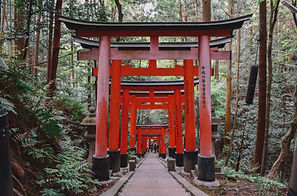


After the practice migrated (along with Buddhist monks) from India and settled primarily into the culture of Thailand, it started to become known by outsiders as Thai Yoga Massage, instead of Nuad Bo Rarn meaning "ancient healing way". Thus, it obviously took on more of a Thai identity; which, although deserving, caused a tendency to forget that its roots come from other and older modalities. Ironically, today TYM "traditionalists" typically like to keep the practice free of outside influences, even though the practice originated from so many outside influences. Nevertheless, the Thai influence is of huge importance and a tradition to preserve its influence is important too. After all, it is the Thai practitioners who continually refined many aspects of the practice and made it a global healing phenomenon.

However, as one having practiced and taught both Elemental Yoga and Thai Yoga Massage in several countries over the past 25+ years, I see huge blessings to the practice often being forgone as folks (often not even from Thailand) think they are protecting it -in the name of tradition- when they are actually and adamantly extracting it from its many wise and ancient roots; even beyond Ayurveda, TCM and Shiatsu.
Furthermore, ancient traditions are not the only way this practice has become as great as it is. If tradition was the only way we should follow, then even the Thai influence would be defying its roots in Ayurveda. In other words, traditions are not meant to be etched in stone, never to be improved upon, but to build an ever improving pathway to a better future.
Even the west has brought an important influence. And that is safety! Albeit, this influence is probably due to so many people in the west being ready and willing to sue anyone for anything. But, nevertheless, and even in the west, I have seen practitioners take clients so deeply and quickly into TYM maneuvers that it is often more detrimental than helpful; nor are the majority of practitioners -adequately nor accurately- pressing along the channels and acu-points that provide that great release of both tension and energy; that would easily prepare clients to properly receive those deep stretching maneuvers.
Unfortunately, these overly deep stretches that are applied prematurely are due to one thing that never seems to escape all kinds of yoga traditions. And that is a lot of temptation towards showmanship; wherein the practitioner wants to use many fancy maneuvers that often create massive leverage, taking a recipient far deeper than they are ready, much less would find beneficial. But, Hey, it looks really cool, right!
I fell into that trap myself in my early days as a practitioner. In fact, it was all those cool TYM maneuvers that attracted me to the practice. But, just as it is in postural yoga practices, there is a huge, natural, but very faulty assumption that greater flexibility is the main goal of the postures. And yet a practice focused primarily on stretching maneuvers -while too often neglecting precise acupressure (or any acupressure altogether)- too often steals away from the greater healing magic enabled by more attention to precise acupressure. For greater flexibility is just one of many tools that are used to open and stimulate the meridians (channels, sen lines); wherein lies the true magic of this full body, mind & spirit "massage".
In fact, the greater traditional goal of TYM was to impart a meditative state of mind to the monks that developed the practice in their monasteries long ago. However, a meditative state does not rule out any intentions and implications for overall health. In fact, truly good and holistic health is in turn conducive to a meditative state, and vice versa. However, there is something far greater than health and meditation that the meridians also have an affect upon, and that is our Virtue (Character / Integrity) ~ And it is here that we (not depart but) press beyond the limitations often imposed upon the practice.
"Where there is a way, there is a limitation."
~ Bruce Lee
I hope you can see from what is written above that tradition is to be respected and is ever-important, but it can also have limitations. It is such a typical human habit to think we can "hold running water in a bucket." All the while, the Taoist belief (that Bruce Lee clarifies so well in the quote above) implies that once you lock something into "a way" you kill it. For a way is not the same as the way (the Tao). The Way is a flow and if you try to hold and contain a flow it is no longer a flow, such as life itself, and everything that gives life. Everything has Yin and Yang too. Tradition is essential to preserve it, but tradition can also deter it; though it need not be that way! And, as the Buddhists would remind us, there is a "middle way." And, the middle way can be a bridge that balances between the east and west, this culture and that, old and new, time-tested and experimental.


Acu Thai is a healing modality that is both deeply grounded in the meridian knowledge of Asana and Acupressure, but also reaches deeply into Elemental wisdom found throughout the world (but elaborated upon greatly in TCM and Ayurveda which refer to it as the Panch Maha Bhuta or Five Great Elements: Earth, Water, Fire, Air, Space) as well as bringing in some sane modern and western influences; especially when it comes to safety, but also in terms of when modern medicine "discovers" something that the ancient way has known for ages. It can be frustrating and insulting when "modern" medicine claims to discover something that say TCM has known for ages (all the while disparaging TCM), but the modern take on ancient ways can often add an extra layer of understanding (and in modern terms) to the ancient ways.
Acu Thai welcomes truth from wheresoever it may come. It embraces not the lamp, but the light; and turns unto it from whatsoever lamp gives the light; be it TCM, Ayurveda, Shiatsu, Thai or Toledo. Truth is truth and truth is One. Furthermore, such breadth of truth leads to depth. In other words, Acu Thai can go into very deep detail as to how it works the miracles that it does. And, again, it is precisely because it draws upon a diversity of wisdom, to enrich the tradition rather than isolate it.
Putting it all together:
Acu Thai precisely targets and opens the meridians to activate the elements needed to get us through any variety of life's challenges; and not just the physical ones. Often we do this by adding Resistance Stretching (rather than constant passivity as typical in traditional TYM) which is more safe and effective than traditional stretching. This also brings greater stimulation to the meridian while strengthening the muscle and shredding damaged/excessive fascia; that is usually the cause of blocked meridian energy. The body expels this fascial waste and leaves the meridians open, thus improving the function and efficiency of the organs while simultaneously bringing out the elemental/spiritual qualities (virtues) with which they correspond. Furthermore, Acu Thai often fosters an insightful conversation around the wisdom of the 5 Great Elements (Panch Maha Bhuta) which leads to strategies and practices one can incorporate into their every day life. Some even refer to it as massage psychotherapy, but it is in many ways much deeper as it works with one's whole being, whereas most psychotherapy is limited to working with the mind. ~But this topic opens a whole new dimension of discussion that would be too much to go into on this page. Nevertheless, here is another link where you can learn more about the power of Acu Thai.

Don't want to Wait?
Take 2 Levels of training at once, or even stick around for our 3rd and final training: Vishwa Ayurveda: Elemental Yoga Therapy (Details Below)
Completing these 3 trainings grants you a "Level 3 Adept" AcuThai Practitioner Certification.
Bali, Indonesia
February 26 ~ March 18, 2027.
The Seated Sequence + The 33 Keys
Although the full body sequence is great to start with or should at least add at some point to howsoever levels of training you ultimately do, still, starting with or adding the Seated Sequence gives your a great bodyworking toolbox within itself:
It is a much deeper dive into the meridians of the arms neck and shoulders and the maneuvers are more highly suited to clients who come to you with most specifically with neck and shoulder issues.
Also, clients who already come for the full-body sequence are going to like the variety this sequence brings to your routines. In fact, even as the practitioner, you will enjoy the option of not always being limited to the full body sequence.
About The 33 Keys
This aspect of the seated sequence training actually comes in segments. In other words, during breaks from the physical work of learning, practicing and refining the seated sequences we will utilize this time dive more deeply into some favorite and most utilized acupressure points; about 33 (out of 365) of our fav's to be exact. However, we don't just boringly learn the points, we also give them life by telling many little healing stories with most of the points to help you get an idea of their power as well as to help you remember them. Such as...
Brandon who was scheduled for spinal surgery but, after massaging his bladder meridian, and particularly an acu-point known as a "Potent Gate of Chi", he was able to painlessly touch his toes. Thereafter, he cancelled the dangerous surgery he had scheduled.
Helen had painful thumb arthritis to the point that her doctor put her thumb in a sling. After opening the lung meridian along her whole arm -which allowed the thumb knuckle to release and pop- the arthritis in her thumb completely disappeared.
There are many stories like these, and an equal number of them are tales of emotional release, psychological issues, and spiritual development. However, those types of stories are more often associated with students who take their training to our next level...
Friday 1/22 : 6pm - 8pm
Saturday 1/23 : 11am - 7pm
Sunday 1/24 : 1pm - 6pm
$333
$295 if paid before Nov 1st
To register and for payment details, contact Will @
This following training is currently only held in Bali, Indonesia

You can take this training without having first taken either of the other Acu Thai trainings listed above. In fact, none of the trainings listed on this page need to be taken in any particular order. However, in order to be certified as a Level Three AcuThai Practitioner, you will need to complete all 3 levels of training. Nevertheless, the Vishwa Ayurveda 300Hr training (described at the link below) trains you to be an Elemental Yoga Therapist (RYT300) which you will probably find to be as advantageous in itself without even learning the Acu Thai segments that are included in this course. However, when you do have this course - in addition to the Full-Body and Seated Trainings - we consider you a "Level 3 Adept" Acu Thai Practitioner, as you will have completed 3 levels of training in which we have no doubt you will be working some miracles from time to time with your clients; and via many different modalities beyond massage therapy when you add the skills of Vishwa Ayurveda.
The Vishwa Ayurveda training is far too much to describe here.
So please head to this link to learn more.
Please Note:
-
To receive a practitioner's certificate you must also complete at least Ten 90 minute practice massages. One of these Ten must be with the instructor in which you will be given step by step feedback.
-
Students must demonstrate some standards of quality. We do not grant certificates just for showing up and completing the hours.
Apply to any of the trainings listed above by contacting Will at vishwayoga.com
Only accepting 12 Students Max Per training